
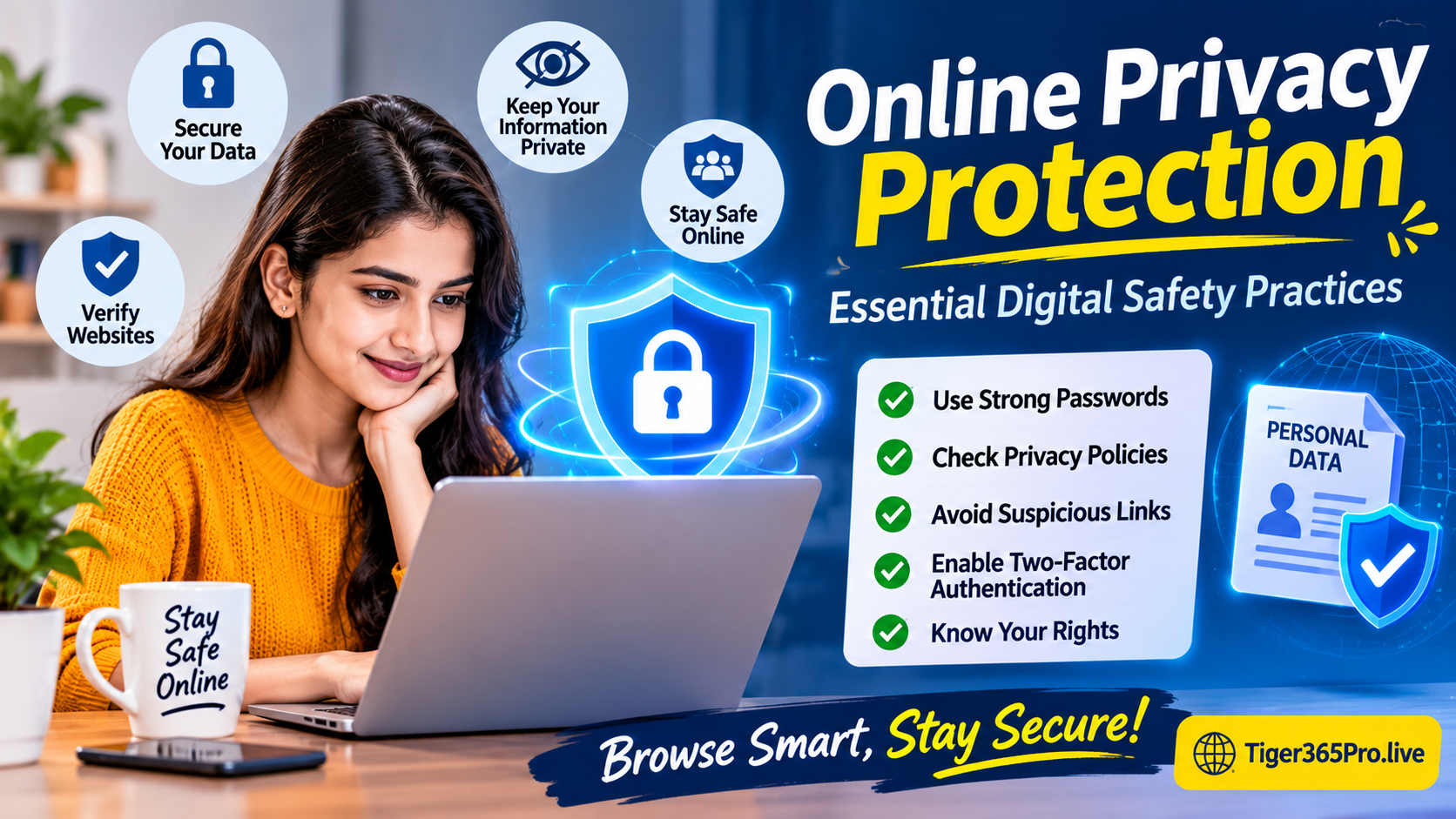
Online Privacy Protection: Essential Digital Safety Practices
online privacy protection practices, personal data security tips, website verification methods and cybersecurity habits to stay safer online in 2026.
Introduction
The internet has become an essential part of everyday life. People use websites, mobile applications and digital services for communication, entertainment, education, shopping and information. Although these services make everyday activities more convenient, they also involve sharing personal information across different digital environments.
Every time someone creates an account, visits a website, submits a form or downloads an application, certain information may be collected or processed. This can include contact details, device information, browsing-related information and other personal data, depending on the service.
This makes Online Privacy Protection an important part of responsible internet use in 2026.
Understanding how websites collect information, reviewing privacy policies and using secure account practices can help users make more informed decisions. A website’s professional appearance does not automatically mean that its data handling practices are reliable.
For people researching online platforms, including Tiger365Pro.live, it is important to distinguish between published privacy statements and independently verified security practices. A website should not be assumed to protect personal information unless its policies and relevant safeguards can be properly examined.
This guide explains practical ways to protect personal information, understand website privacy policies, recognise common online threats and develop safer digital habits.
What Is Online Privacy Protection?
Online Privacy Protection refers to the practices, policies and technical measures used to safeguard personal information when people use internet-based services.
It involves understanding what information is collected, why it is needed, how it is stored and whether it is shared with other organisations.
Personal information can include:
- Name and contact details.
- Email addresses and phone numbers.
- Account usernames and login information.
- Device and browser information.
- Location-related information.
- Financial and transaction-related details.
- Other information that can identify an individual.
Not every website collects all these details. The information collected depends on the purpose and operation of the particular service.
Why Is Digital Privacy Important?
Digital privacy matters because personal information can be misused when it is collected without appropriate safeguards or shared without proper authority.
For example, exposed contact information may lead to unwanted messages, phishing attempts or impersonation. Weak account security can also allow unauthorised people to access private accounts.
Digital Privacy Protection helps individuals understand their responsibilities and make more careful decisions when using online services.
Why Is Personal Data Security Important?
Personal data has become an important part of modern digital services. Websites and applications may use information to provide services, maintain accounts, communicate with users or improve technical performance.
However, collecting information creates responsibilities for the organisation handling it.
Protecting Identity Information
Personal details should be shared only when there is a clear and legitimate reason.
Avoid sending identity documents, confidential information or personal photographs to unidentified individuals through messaging applications.
Before submitting information, understand who is requesting it and how it will be used.
Preventing Unauthorised Access
Unauthorised access may expose personal messages, account information and private documents.
Unique passwords and appropriate security settings can reduce the risk of account compromise.
Reducing the Risk of Digital Fraud
Cybercriminals may use stolen information to create convincing messages or impersonate genuine organisations.
Personal Data Security practices help users recognise unusual requests and avoid disclosing confidential details.
How Do Websites Collect and Use Personal Information?
Different websites collect different types of information depending on their functionality.
Understanding these methods helps users recognise what happens when they browse or interact with a digital service.
Information Provided Directly by Users
Some information is supplied through forms, contact sections, account pages or customer support conversations.
Examples include names, email addresses and communication preferences.
Users should check whether providing each requested detail is necessary for the service being accessed.
Automatically Collected Information
Websites may collect certain technical information when someone visits a page.
This may include:
- Browser type.
- Operating system.
- Device information.
- IP address.
- Website usage information.
- Cookies and similar technologies.
The exact information collected varies by website and its technical configuration.
Third-Party Data Collection
Some websites use external services for analytics, hosting, communication or other technical functions.
These services may process information according to their own arrangements and privacy practices.
A clear Website Privacy Policy should explain relevant third-party data sharing and the purposes behind it.
Essential Online Privacy Protection Practices
Protecting personal information does not require complicated technical knowledge. Consistent everyday habits can significantly improve awareness and reduce avoidable risks.
Use Strong and Unique Passwords
A strong password is one of the simplest ways to protect an online account.
Avoid using common words, predictable number combinations or easily available personal information.
Use different passwords for important accounts rather than repeating the same password across multiple websites.
A reputable password manager can help users create and manage unique passwords.
Enable Two-Factor Authentication
Two-factor authentication adds another verification step when logging into an account.
Depending on the service, this may involve an authenticator application, security key or another supported verification method.
It can reduce the risk of unauthorised access when a password becomes compromised.
However, users should never share verification codes with unknown individuals.
Avoid Sharing Unnecessary Information
Not every online form requires every personal detail.
Before submitting information, consider whether the requested details are relevant to the service.
Avoid providing confidential information through unknown links or unofficial communication channels.
Keep Devices and Applications Updated
Software updates often include security improvements and corrections for known vulnerabilities.
Keep operating systems, browsers and applications updated through official sources.
Remove applications that are no longer required, especially when they request unnecessary permissions.
Review Account Permissions Regularly
Some applications request access to contacts, photos, microphones, cameras or location information.
Review these permissions from device settings and disable access that is not necessary.
This helps maintain greater control over Personal Information Protection.
How to Identify a Reliable Website Privacy Policy
A privacy policy explains how an organisation handles personal information.
Before submitting sensitive details to an unfamiliar website, users should read its privacy policy instead of relying only on general security statements.
Check What Information Is Collected
The policy should explain the categories of information collected.
Look for clear descriptions rather than broad statements that make it difficult to understand the data being requested.
Understand the Purpose of Data Collection
Information should be connected to clearly explained purposes.
For example, an organisation may need contact information for communication or certain technical information for maintaining its website.
Users should understand why information is required before providing it.
Check Data Sharing Practices
Review whether the organisation shares personal information with third-party service providers or other organisations.
A transparent policy should explain relevant sharing arrangements and purposes.
Understand Data Retention
Data retention describes how long personal information is kept.
Users should look for information about retention periods, deletion procedures and situations where information may need to be retained under applicable legal requirements.
Look for Contact and Complaint Information
A useful privacy policy should identify how people can raise privacy-related questions or complaints.
This information helps users understand where to direct concerns if they believe their information has been mishandled.
Common Online Privacy Risks Users Should Recognise
Online Security Awareness starts with understanding the threats that may affect personal information.
Some risks are caused by technical weaknesses, while others involve misleading communication or careless information sharing.
Phishing Attacks
Phishing is a technique used to trick people into revealing confidential information.
A fraudulent message may imitate a bank, website administrator or customer support representative.
Common warning signs include:
- Unexpected login links.
- Urgent account verification messages.
- Requests for OTPs or passwords.
- Unfamiliar sender addresses.
- Suspicious attachments.
Always verify the sender before responding to unexpected requests.
Identity Theft
Identity theft occurs when someone uses another person’s personal information without permission.
Stolen details may be used for impersonation, fraudulent communication or unauthorised account activity.
Avoid sharing sensitive information with unidentified people and monitor accounts for unusual activity.
Fake Websites
Some websites copy the appearance or name of existing organisations to make visitors believe they are genuine.
Carefully examine the domain name, operator information, contact details and privacy policies.
An HTTPS connection alone does not prove that a website is legitimate.
Unsecured Public Wi-Fi
Public Wi-Fi networks can create additional security risks, especially when users connect to unknown networks.
Avoid accessing sensitive accounts through unfamiliar networks.
Use trusted connections and follow the security recommendations of the relevant service provider.
Unverified Downloads
Files and applications from unknown sources may contain malicious software or request unnecessary access to personal information.
Download applications through official channels and review permissions before installation.
Safe Internet Practices for Everyday Users
Safe Internet Practices involve making careful decisions while browsing, communicating and accessing online services.
Verify Website Addresses
Check website addresses before entering personal information.
Look for spelling differences, unfamiliar domain extensions and unexpected redirects.
A domain that resembles an established brand should not automatically be considered an official website.
Avoid Suspicious Links
Do not open unexpected links received through email, text messages or messaging applications.
When a message refers to a specific organisation, visit its official website through a separately verified address.
Protect Financial Information
Never share banking PINs, card security codes or OTPs with unknown individuals.
Review transaction notifications and contact the relevant bank immediately if suspicious activity is detected.
Use Secure Browsing Habits
Keep browsers updated, avoid suspicious downloads and pay attention to website permission requests.
Close unnecessary sessions on shared devices and sign out after accessing private accounts.
These small habits help make everyday internet use more secure.
Online Privacy Protection in India: Understanding the DPDP Framework
India has introduced the Digital Personal Data Protection Act, 2023 to establish a framework for handling digital personal data.
The Digital Personal Data Protection Rules, 2025 were notified on 14 November 2025. Their implementation follows a phased commencement schedule rather than making every provision effective on the same date.
The framework addresses important principles such as transparency, consent, purpose limitation, data minimisation, security safeguards and accountability.
What Does the DPDP Framework Mean for Individuals?
The framework is designed to provide a structured approach to the processing of digital personal data.
Individuals should pay attention to how organisations explain the purpose of data collection and how they communicate relevant privacy information.
Why Is Clear Consent Important?
People should be able to understand what information is being requested and why it is needed.
Clear notices make it easier to make informed decisions about sharing personal information.
What Should Organisations Consider?
Organisations handling digital personal data should understand their applicable responsibilities, including transparency, security safeguards and relevant compliance timelines.
The precise obligations and commencement dates should be checked against the official Act, Rules and notifications.
Official reference: Ministry of Electronics and Information Technology (MeitY).
Privacy Awareness When Visiting Online Platforms
People researching a website should not assume that it follows good privacy practices simply because it has a professional design.
The same checks apply when examining Tiger365Pro.live or any other unfamiliar online platform.
Examine the Website’s Privacy Information
Look for a privacy policy that explains what information is collected and how it is handled.
Check whether the document identifies the responsible organisation and provides clear contact information.
Verify Website Ownership
Review the available information about the website operator.
Where possible, compare its published business details with independent records.
Avoid Sharing Confidential Information
Do not provide unnecessary identification documents, account passwords or banking credentials to an unidentified person.
Be particularly careful when someone requests confidential information through unofficial messaging channels.
Understand the Nature of the Service
Before relying on an online platform, understand what service it actually provides and whether its activities comply with the applicable laws.
A website being accessible online does not establish that its services are legally permitted.
Understanding Online Gaming Regulations and User Safety in 2026
Privacy awareness is particularly relevant when researching websites connected with digital entertainment or gaming.
India’s Promotion and Regulation of Online Gaming Act, 2025 establishes a framework for online gaming, including prohibitions concerning online money games.
The accompanying Promotion and Regulation of Online Gaming Rules, 2026 came into force on 1 May 2026.
The framework addresses user safety, transparency, permissible gaming categories and restrictions concerning prohibited online money gaming services.
Users should not assume that every online gaming service is legally permitted merely because it can be accessed through a browser.
For current legal information, consult official government notifications and seek qualified legal advice where necessary.
What Should You Do If Your Personal Information Is Exposed?
Even people who follow good security practices may experience data exposure or account compromise.
Taking appropriate action quickly can help reduce further risks.
Change Compromised Passwords
Change affected passwords immediately.
If the same password was used on other websites, update those accounts as well.
Secure Your Email Account
Email accounts are often connected to password recovery and account verification.
Review recovery details, active sessions and security settings.
Contact the Relevant Service Provider
Inform the relevant organisation if you notice unauthorised activity or believe your information has been exposed.
Use officially verified contact details.
Report Financial Fraud
For suspected financial cyber fraud in India, contact your bank or payment provider immediately.
You can also report cybercrime through the Government of India’s official portal:
For urgent financial cyber fraud reporting, the national helpline is 1930.
Monitor Your Accounts
Check account activity, transaction notifications and security alerts regularly.
Look for unfamiliar login sessions or unexpected changes to account settings.
Conclusion
Online privacy is an important part of responsible digital behaviour. As more everyday activities move to internet-based services, understanding how personal information is collected and used becomes increasingly valuable.
Practising Online Privacy Protection involves more than creating a strong password. It also requires reviewing privacy policies, recognising phishing messages, limiting unnecessary information sharing and understanding the risks associated with unfamiliar websites.
For people researching online platforms such as Tiger365Pro.live, independent verification is especially important. Published security statements should not be accepted without examining the underlying policies and evidence.
By following practical Data Protection Practices, improving Online Security Awareness and adopting responsible browsing habits, individuals can make more informed decisions about their digital information.
A safer online experience begins with awareness, verification and control over personal data.
Frequently Asked Questions About Online Privacy Protection
What is Online Privacy Protection?
Online Privacy Protection refers to practices and safeguards that help individuals control and protect personal information while using websites, applications and other internet-based services.
Why is Digital Privacy Protection important?
Digital Privacy Protection helps reduce the risks of unauthorised data access, identity theft, phishing attacks and misuse of personal information.
How can users improve Personal Data Security?
Users can improve Personal Data Security by using unique passwords, enabling additional authentication, limiting unnecessary information sharing and reviewing website privacy policies.
What should a Website Privacy Policy contain?
A Website Privacy Policy should explain the information collected, purposes of processing, data sharing practices, retention arrangements and relevant contact information.
What are the best Safe Internet Practices?
Important practices include verifying website addresses, avoiding suspicious links, using strong passwords, updating devices and protecting confidential information.
How does Online Account Security work?
Online Account Security involves measures such as strong passwords, additional authentication, secure recovery settings and monitoring account activity to reduce unauthorised access.
What should users do after a phishing attack?
Avoid further interaction with the suspicious message, change affected passwords, secure connected accounts and report relevant financial or cybercrime activity through official channels.
What is the Digital Personal Data Protection Act, 2023?
It is Indian legislation establishing a framework for processing digital personal data and protecting individuals’ interests in relation to that information. Its Rules were notified in November 2025 with phased implementation timelines.
Does HTTPS guarantee that a website protects personal information?
No. HTTPS encrypts communication between a browser and a website, but it does not independently verify the website operator, data handling practices or legal compliance.